A frozen pipe usually doesn’t announce itself when it freezes. It lets go later, often when the pipe thaws, and often in a unit nobody is standing in. A few hours of walking your buildings before the first hard freeze costs far less than opening up walls in January.
Here’s the list we’d work through on an apartment community or a small rental portfolio in Central Illinois. You can do all of it with your own team, or hand it to a vendor as one scheduled visit.
Key takeaways
- Vacant units are the highest risk, because nobody’s there to notice a problem.
- Make sure every person who answers a maintenance call knows where the shutoffs are.
- Do the roof and gutter check before leaves and ice make it harder.
- Write it all down, so next year’s walk starts from a list instead of from memory.
Start with vacant units
An empty unit with the heat turned down is where a small freeze becomes a large repair. Water can run for days before anyone sees it, and in a stacked building it travels.
- Keep the heat on and set it to a safe minimum. 55 degrees is a common rule of thumb.
- Check the thermostat batteries, and confirm the heat actually comes on.
- Decide whether long-term vacant units should have the water shut off and the lines drained.
- Add vacant units to a regular walk-through, not just a check at move-in.
- Read your insurance policy’s vacancy language. Many policies have specific conditions for empty units, so ask your agent what yours requires.
Find the exposed pipes
Most freeze trouble comes from the same few places, so go looking for them on purpose:
- Crawlspaces, unheated basements and mechanical closets
- Pipes along exterior walls, especially behind kitchen and bathroom sinks
- Laundry rooms on the outside of a building
- Any spot where you can feel cold air coming through a gap
Insulate what you can reach, and seal the gaps that let cold air get to the pipe. If a unit froze last winter, start there. Unless something changed, it’s likely to freeze again.
Shut off the outside water
Disconnect every garden hose and drain the hose bibs. Where a building has interior shutoffs for its outdoor lines, close them and open the outside faucet to let the line drain. It’s a five-minute job per building, and it’s the easiest item on this list to forget.
Check the roof and gutters while it’s still easy
Clogged gutters hold water against the building, and that water finds its way in when it freezes and backs up. Slow roof leaks are also easier to find before there’s snow on top of them.
- Clean gutters and make sure downspouts carry water away from the foundation.
- Look over shingles, flashing and the line where the roof meets the wall.
- Check top-floor ceilings for stains that weren’t there last year.
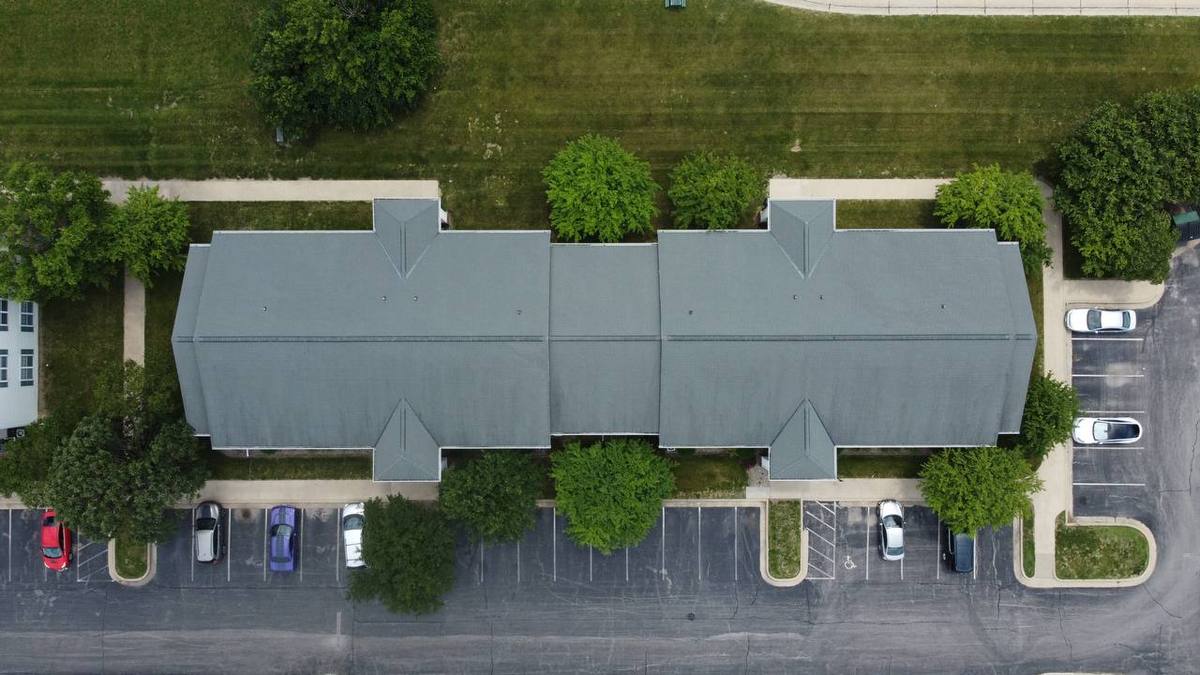
We can fly a drone over your roofs to check shingles, gutters and the roof-to-wall line without putting anyone on a ladder, then send you the photos. It’s also a quick way to look a roof over after a storm.
Service what keeps the building warm
- Change furnace filters, and have heating equipment serviced if it’s due.
- Test smoke and carbon monoxide alarms while you’re in each unit.
- Check weatherstripping on exterior and common-area doors. A door that doesn’t close properly can freeze a nearby pipe.
Make sure the people on call know the plan
When a pipe does burst, the difference between a small repair and a big one is how fast somebody closes the right valve.
- Label the main shutoff for each building, and each unit shutoff if you have them.
- Keep a list of those locations where your on-call person can find it at 2 a.m.
- Tell residents who to call, and show them where their unit’s shutoff is.
- Remind residents to report leaks right away, and to keep the heat on if they travel over the holidays.
- On the coldest nights, ask them to let faucets on exterior walls drip and to open the cabinet doors under those sinks.
If a leak does happen, here’s what to do in the first hour after a water leak.
Put it on a schedule
The value of this list comes from doing it every year, before you need it. That’s the idea behind recurring preventative maintenance: building checks, common-area upkeep and repair items on a regular schedule, so small issues get caught before they become resident complaints.
Erickson Property Maintenance is based in Mattoon and works with apartment communities and commercial properties across Central Illinois. If you’d like a seasonal walk-through added to your properties, send us your unit count and locations. If water is already running, call our 24/7 line at (217) 246-7583.